Wool, cashmere, merino
Natural warmth sells every fall. Check for moth holes against a light.
Value is three questions answered in under a minute: who made it, what is it made of, and what shape is it in. Get fast at those and you'll buy better than people with twice your budget.
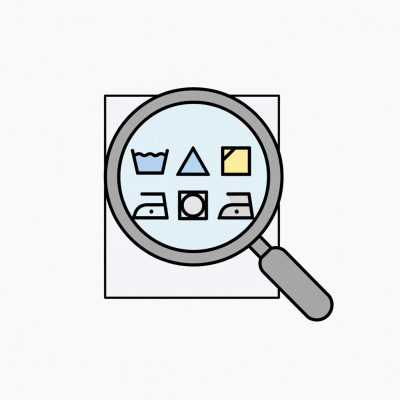
A care label carries more information than most shoppers notice. In the US, garments typically show fiber content, country of origin and either the manufacturer's name or an RN (Registered Identification Number). You can search RN numbers in the Federal Trade Commission's RN database to find out which company made a garment — useful for store brands produced by a known manufacturer, and for dating older items.
Older labels often hint at age: "Made in USA" union labels such as the ILGWU tag on women's clothing point to vintage pieces from the mid-20th century, and vintage tees with single-stitch hems tend to be older than double-stitched ones. Learn these tells for the categories you sell most.
Natural warmth sells every fall. Check for moth holes against a light.
Full-grain jackets, boots and belts. Watch for cracking and peeling "bonded" leather.
Summer linen and selvedge or older Levi's denim attract dedicated buyers.
Even with a known label, low-grade synthetics rarely clear the fees.
Certain names attract buyers consistently: Patagonia and Arc'teryx in outdoor gear; Levi's, Carhartt and Pendleton in workwear and wool; Eileen Fisher and Eileen Fisher-style minimal linen in womenswear; Le Creuset, Pyrex and Corningware in the kitchen. But a brand only tells you there might be demand. The specific style, size and condition decide whether that demand turns into a $12 sale or a $90 one.
Beware of "diffusion" or outlet lines made specifically for discount stores; they often sell for much less than mainline pieces with the same logo.
Use a consistent scale in every listing — new with tags, like new, very good, good, fair — and photograph every flaw. Buyers forgive flaws they were shown; they file returns for flaws they discover. Common deal-breakers: pit staining on light shirts, heavy pilling, broken zippers you can't replace cheaply, smoke or mildew odor, and stretched-out knit cuffs.
Some flaws are cheap fixes. A missing button, a lint-covered sweater or a scuffed leather shoe can be sorted in minutes. Others — stains on silk, cracked leather — usually aren't worth the time.
Value spotting and counterfeit spotting are the same skill. If a luxury item seems underpriced, slow down, check the stitching, hardware and codes, and compare to verified examples. If you can't be sure it's genuine, you can't list it. See our counterfeit checks and move on to choosing a platform.
Cookies on this site
Essential cookies keep this site working. Optional ones help us see what is useful. You can change your choice at any time. Read more