Read the tag first
Brand, fiber content, country of origin and the RN number. RN codes can be searched in the FTC's Registered Identification Number database to identify who made an unbranded garment.
Most flips don't die at the register. They die later — in platform fees, shipping labels, poly mailers and the twenty minutes you spent measuring a jacket. We treat every item like a line on a tally sheet: what you paid, what it sold for, and what actually landed in your pocket.
Every spot has a different price floor, a different rhythm and a different kind of competition. Know which you're walking into before you grab a cart.
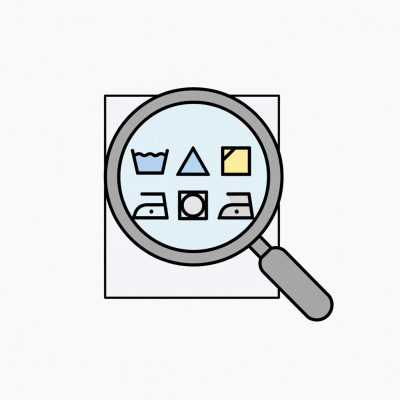
The tag tells you more than the price sticker. Thirty seconds of reading saves you from paying for polyester dressed up as wool.
Brand, fiber content, country of origin and the RN number. RN codes can be searched in the FTC's Registered Identification Number database to identify who made an unbranded garment.
Merino, cashmere, full-grain leather, linen, silk and heavyweight cotton denim hold value. Acrylic blends rarely do, whatever the brand.
Pit stains, pilling, cuff fraying, broken zippers and smoke odor. Each flaw is a discount — or a pass.
Names like Patagonia, Levi's, Pendleton, Eileen Fisher and Le Creuset have reliable demand, but the specific item, size and condition decide the price. Always check sold comps, not active listings.
How to spot valueFees and buyers differ by marketplace. Pick the one that matches the item, not the one you happen to have open. Fee structures change often — confirm on each platform's current fee page before pricing.
Best for: menswear, vintage, collectibles, parts, niche items with search demand.
Fees: a percentage-based final value fee on most categories plus a small per-order fee. Sold-listing filters make it the best comp research tool on the web.
Best for: women's mall and contemporary brands, shoes and bags.
Fees: historically a flat fee on low-priced sales and a percentage on higher ones, with buyers often paying a prepaid shipping label. Offers and bundles drive sales.
Best for: household goods, toys, electronics, casual clothing.
Fees: Mercari has changed its seller fee model several times. Check the current schedule before you lean on it for low-ticket items.
Best for: Y2K, streetwear, vintage tees and styled photos.
Fees: payment processing applies; US seller fees have been reduced in recent years. Strong photos matter more here than anywhere.
Best for: furniture, kitchenware, bulky items you don't want to ship.
Fees: local pickup sales carry no selling fee; shipped orders do. Meet in public places and take cash or instant payment.
Gross sale minus buy price is not profit. Here's what three real-world style flips look like once every line is filled in. Rates below are illustrative assumptions, not current platform quotes.
| Item | Buy | Sold | Fees | Ship + supplies | Travel | Net | Per hour |
|---|---|---|---|---|---|---|---|
| Fleece jacket (eBay, 14% + $0.40 assumed) | $8.00 | $55.00 | $8.10 | $10.50 | $1.50 | $26.90 | ~$65 (25 min) |
| Pyrex mixing bowl (local pickup) | $4.00 | $32.00 | $0.00 | $0.00 | $2.00 | $26.00 | ~$78 (20 min) |
| Mall-brand top (flat $2.95 fee assumed) | $3.00 | $14.00 | $2.95 | $0.50 | $0.50 | $7.05 | ~$28 (15 min) |
Selling a fake isn't a bad flip — it's an account ban, a refund and possibly a legal problem. If you can't authenticate it, leave it on the shelf.
Genuine goods have even, consistent stitch counts and logos aligned to seams. Crooked monograms, fuzzy embroidery and glue residue are red flags.
Compare the care tag font and layout with verified examples. Look up RN numbers. Luxury pieces often carry date codes or serial patches (for example, Coach creed patches) — learn the format before you buy.
Heavy, engraved hardware and branded zippers (YKK, Riri, Lampo) are typical of quality goods. Light, plated, unmarked hardware on a "designer" bag is a warning.
A $6 "designer" bag in a glass case at a chain thrift store has usually been checked already. Be most skeptical of the deals that look easiest.
eBay's VeRO program lets rights owners remove listings, and every major marketplace bans replicas — even listed as "inspired by." When unsure, use a paid authentication service or don't list.
$50–$100 is enough to source a first batch of 10–20 items. Reinvest profits before scaling.
Yes. In the US, the first-sale doctrine lets you resell genuine items you lawfully own. Counterfeits are never legal to sell.
Profit is generally taxable income. Keep receipts for every buy and talk to a tax professional.
Use sold listings, not active ones. Price near the middle of recent sales for the same brand, size and condition.
Found a fee change we missed? Got a sourcing spot that deserves a row? Draft your note with our contact tool, copy it or download it, and send it to [email protected].
Write to UsCookies on this site
Essential cookies keep this site working. Optional ones help us see what is useful. You can change your choice at any time. Read more